
Follow us on social media!


Who we are
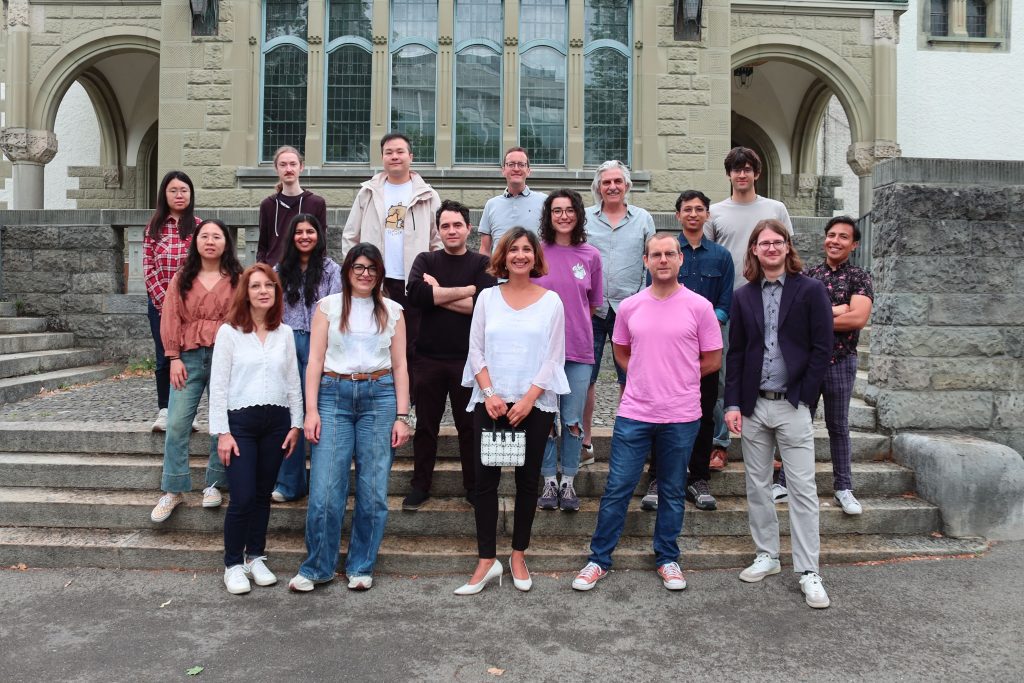
We are a young and dynamic research group based in Bern, Switzerland, and led by Prof. Natalie Banerji. In our group, chemists as well as physicists and material scientists work side by side to understand and optimize electronic devices based on organic electronic materials. In addition, we combine the best of two worlds by welcoming researchers from all over the world and by teaching local students from Bern.
This combination of different backgrounds and experiences forms a powerful symbiosis that enables us to understand the underlying principles of charge transport in the materials we study.
Our research interests
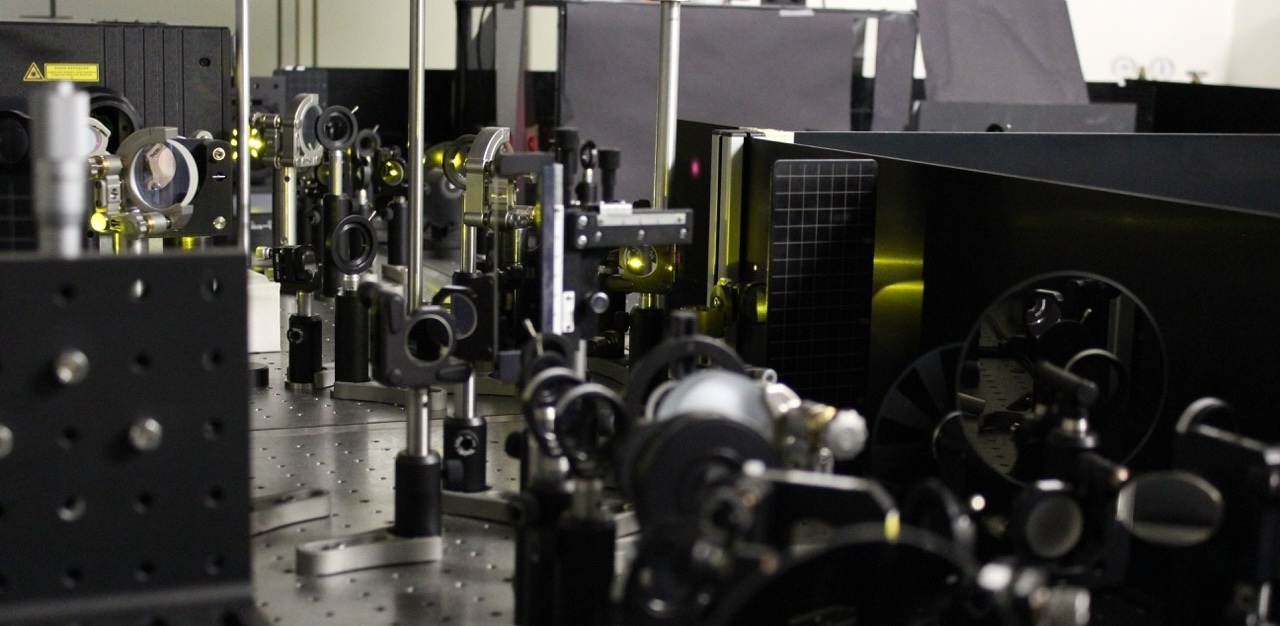
Our objective is to understand fundamental material properties (e.g., light–matter interactions, electron transfer processes, charge transport, molecular recognition) of organic and hybrid semiconductors, with applications in new generation solar cells, organic transistors, and organic bioelectronics. The current gap between missing fundamental understanding and the blind development of applications needs to be filled in order to achieve intelligent design of high-performance devices.
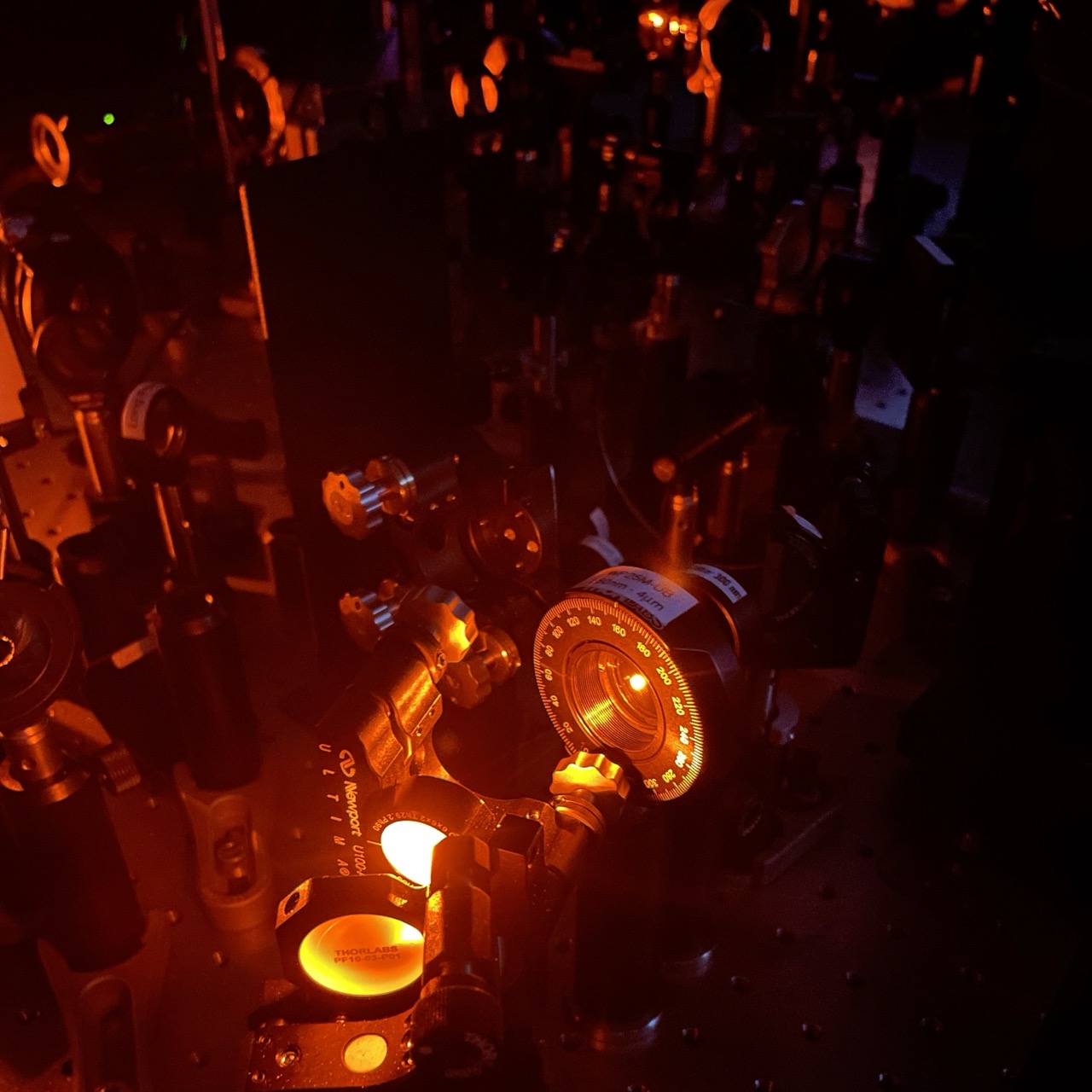
Our research revolves around the central question of what happens on the ultrashort time scale and ultrasmall length scale in organic solids to induce macroscopic function in devices, and how this can be optimized. Experimentally, we use a complementary palette of techniques combining (time-resolved) spectroscopy, pulsed photocurrent methods, terahertz experiments, Stark-effect spectroscopy, and device testing.
News
-
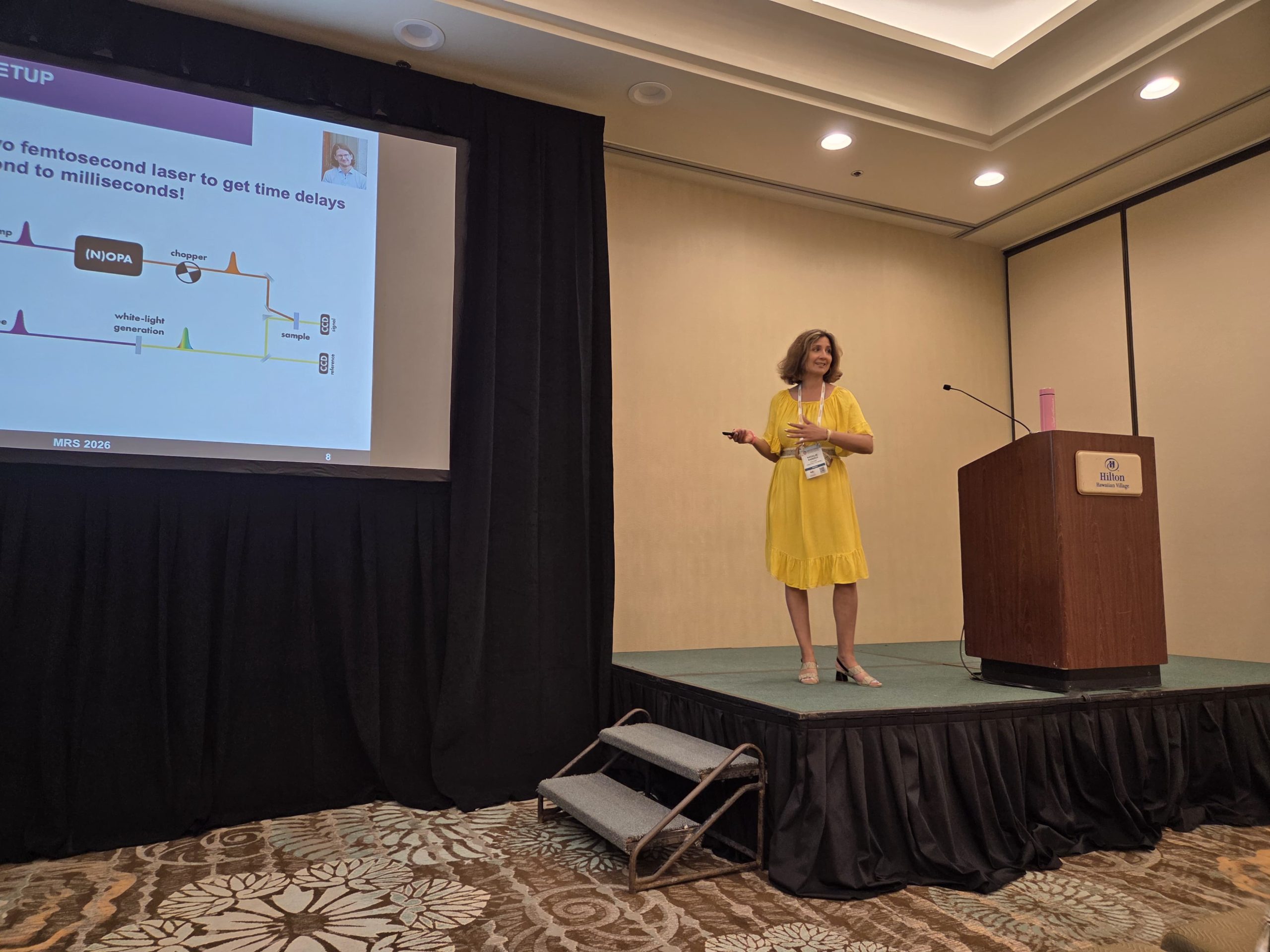
Natalie at MRS in Hawaii
Natalie attended the MRS Spring Meeting 2026 in Honolulu and gave two invited talks about organics photocatalysis and highly doped polymers!
-
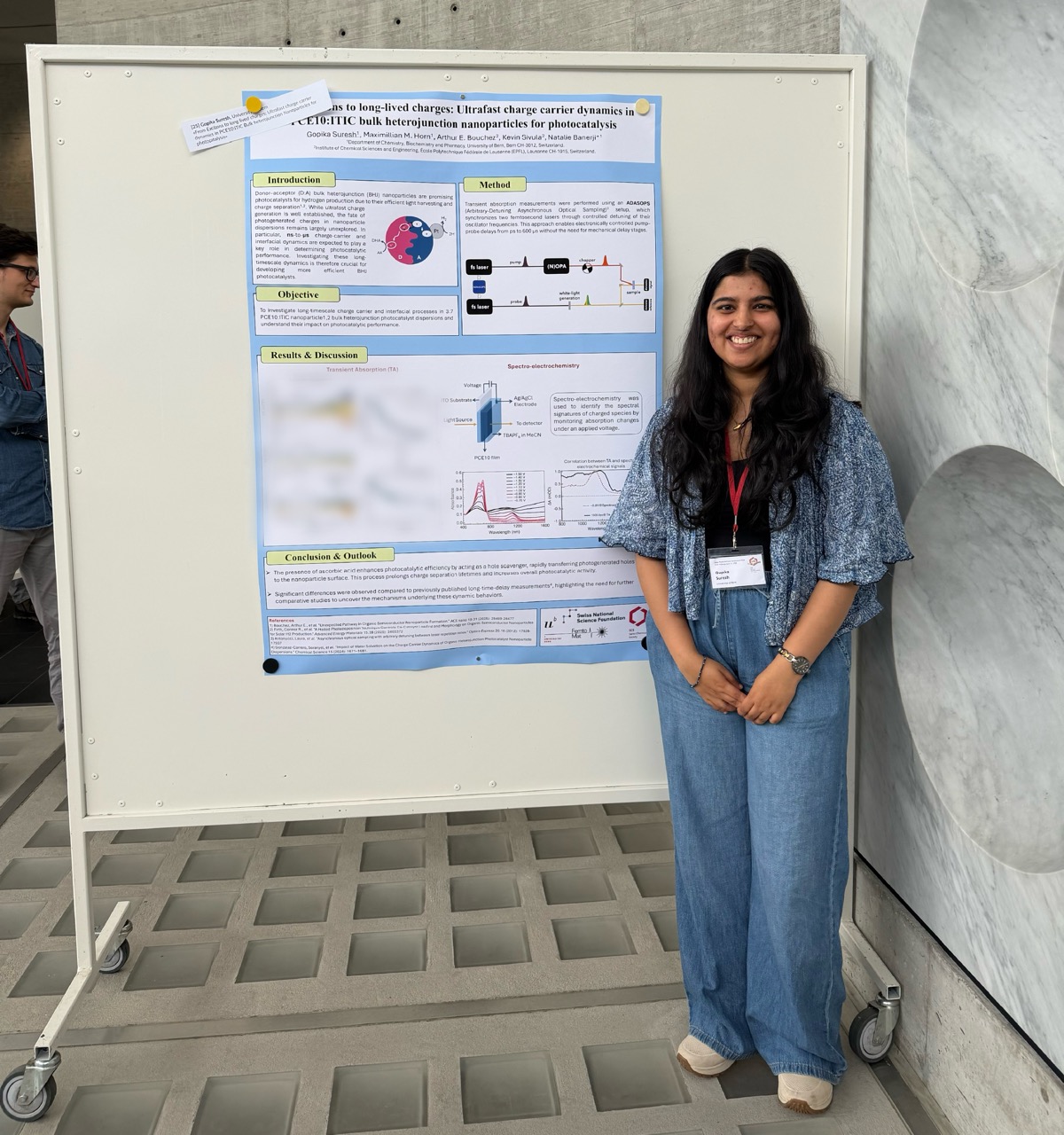
Gopika presents at the Swiss Photochemistry Symposium
Last Friday, Gopika presented the first results of her PhD at the Swiss Photochemistry Symposium in Fribourg. Very well done Gopika! Anouk and Maxi joined as participants, and we had enriching discussions with the other members of the field based in Switzerland. Thanks a lot to the organizers for this wonderful event!
-
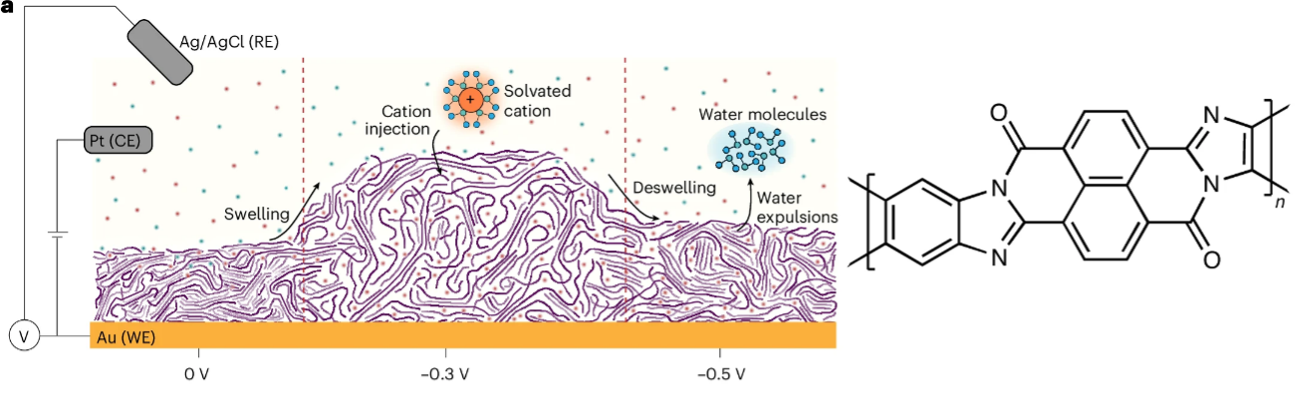
New research published!
Tom van der Pol et al., report a new operation regime in BBL, a polymer deswelling driven by water expulsion owed to polymer-cation interactions upon n-type electrochemical doping. Congrats to the team, we are proud to have contributed with terahertz spectroscopy. Now in Nature Materials!
-
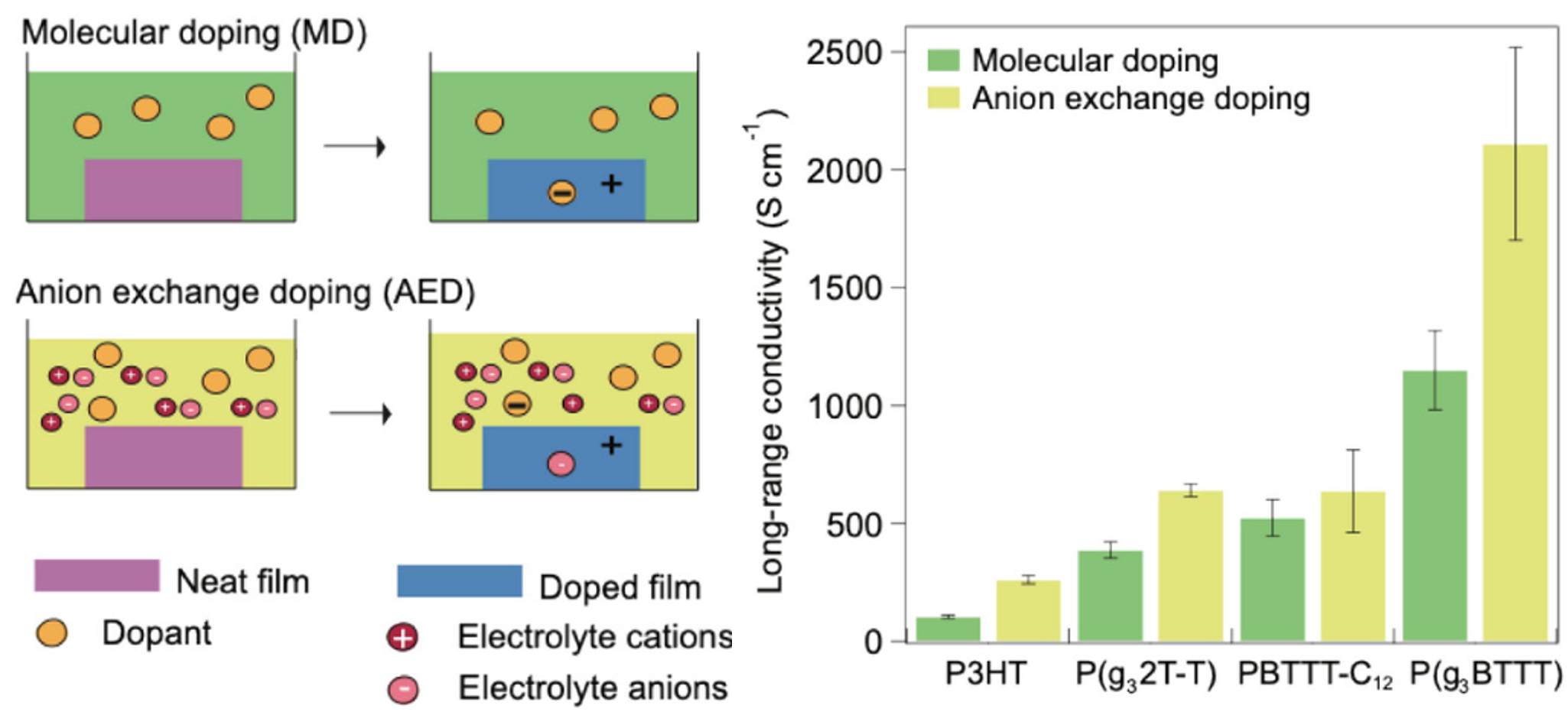
New research published!
Why do some polymers tolerate high doping levels and keep increasing their conductivity, while others decay at similar doping levels? Our PhD student, Basil, explores this in his first paper as first author, now published in Advanced Materials.
-
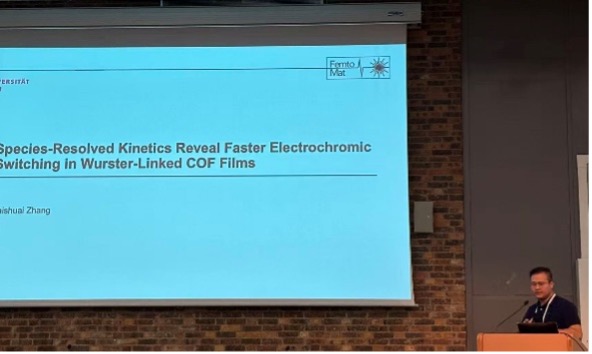
Kaishuai at e-MRS in Strasbourg
Our PhD student Kaishuai Zhang attended the e-MRS spring 2026 conference where he delivered a talk on the dynamics of electrochromic switching in covalent organic frameworks.
-
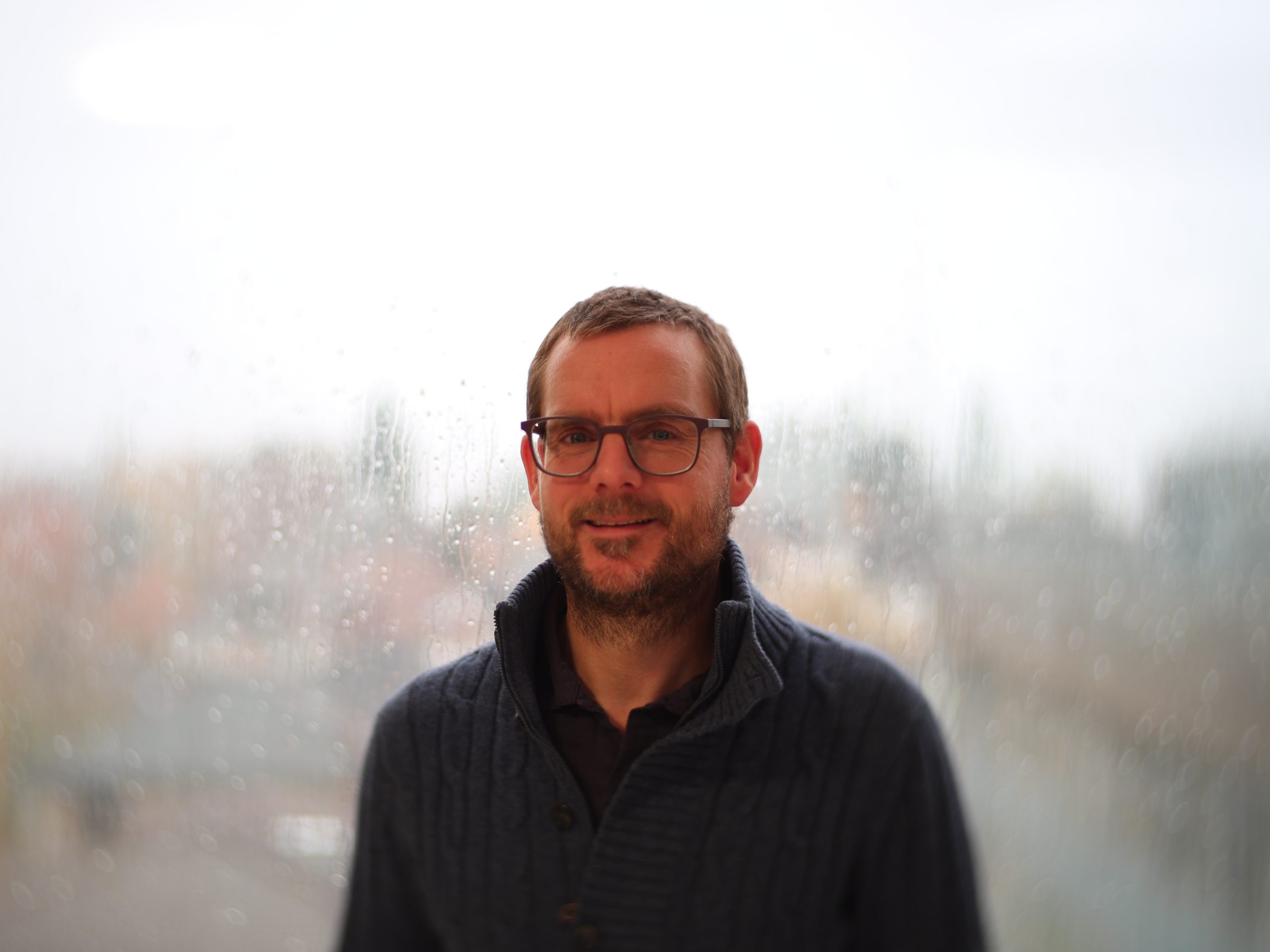
Julien at SPIE photonics
Julien presented at SPIE photonics! He showed his first hyperspectral images of OECTs. The doping and dedoping can be monitored in the channel and on the transparent ITO electrodes at the same time. Time resolved images have also been acquired, giving a unique insight into the doping mechanisms governing the functioning of OECTs.
-
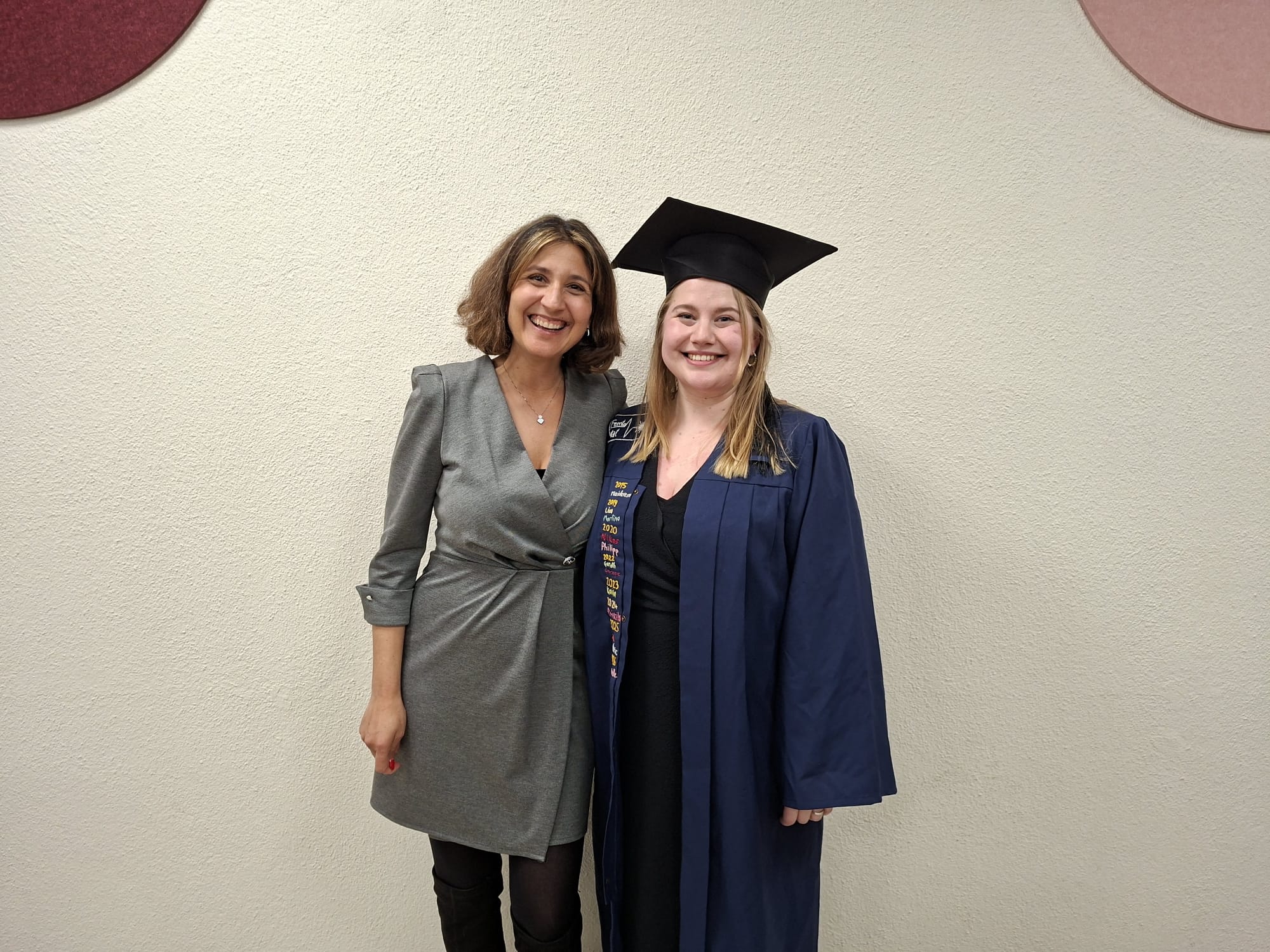
Introducing Dr. Isabelle Heinzen
New PhD in the house! Last Wednesday, Isabelle successfully defended her PhD thesis on the spectroscopic investigation of doping in organic mixed ionic–electronic conductors. You did a fantastic job, and we are super proud of you! All the best for the future ahead of you, you will be missed here!
-
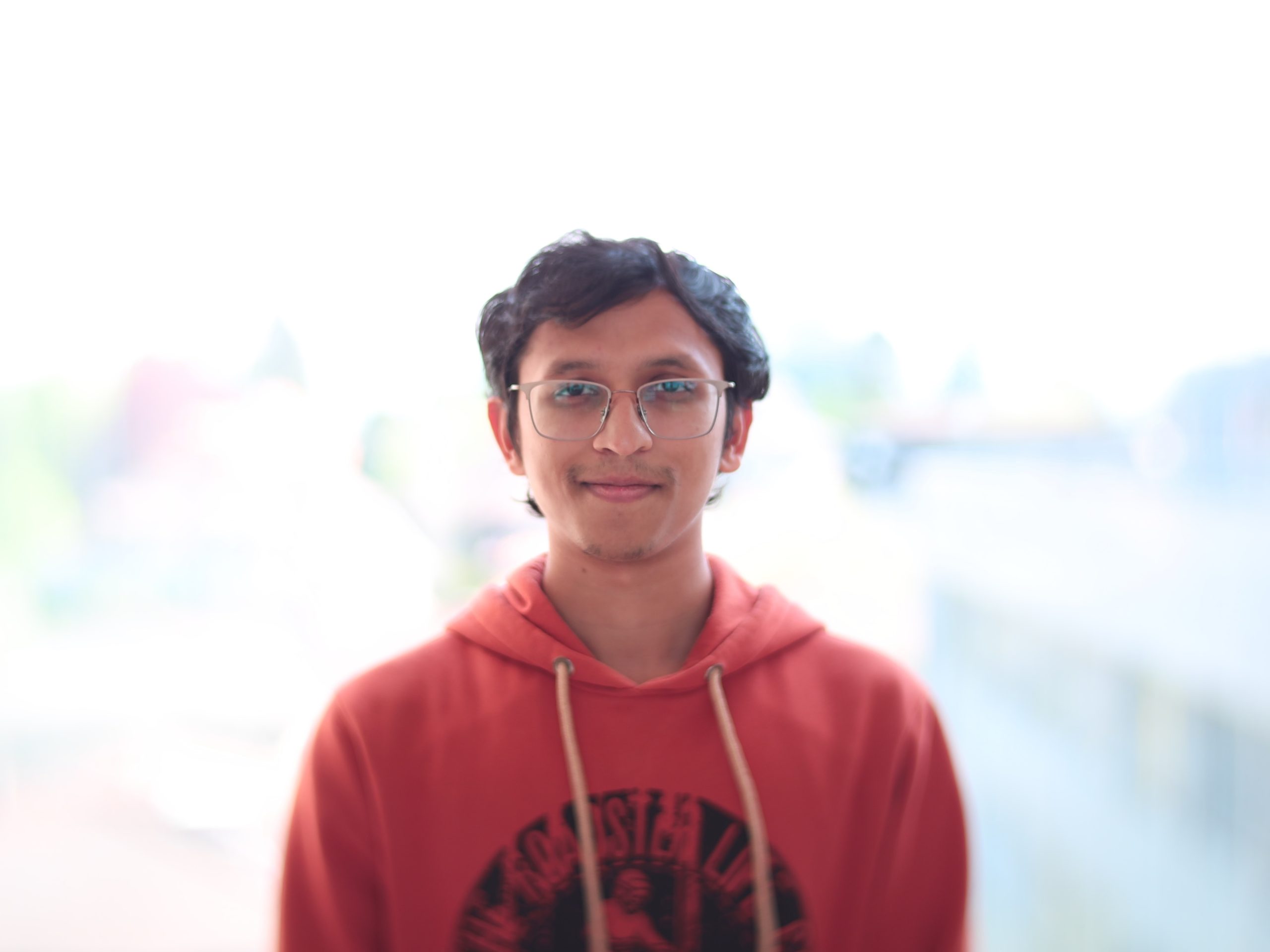
Welcome Varun
A warm welcome to Varun Subudhi who is joining as a Ph.D. student within the MSCA doctoral network FADOS. Varun completed his Integrated M.Sc. degree in Physics at NISER, Bhubaneswar, India, where he specialized in nanoelectronics and organic device physics. At FemtoMat, he will focus on charge transport in doped organic semiconductors using THz spectroscopy to bridge local and macroscopic behaviour. All the best for the start!
-

New research published!
We are thrilled to announce our new publication by Priscila! She studied why P3HT outperforms more polar analogues in OECTs. Thanks to the groups of Sahika Inal and Christian Nielsen for the great collaboration on this project!
-
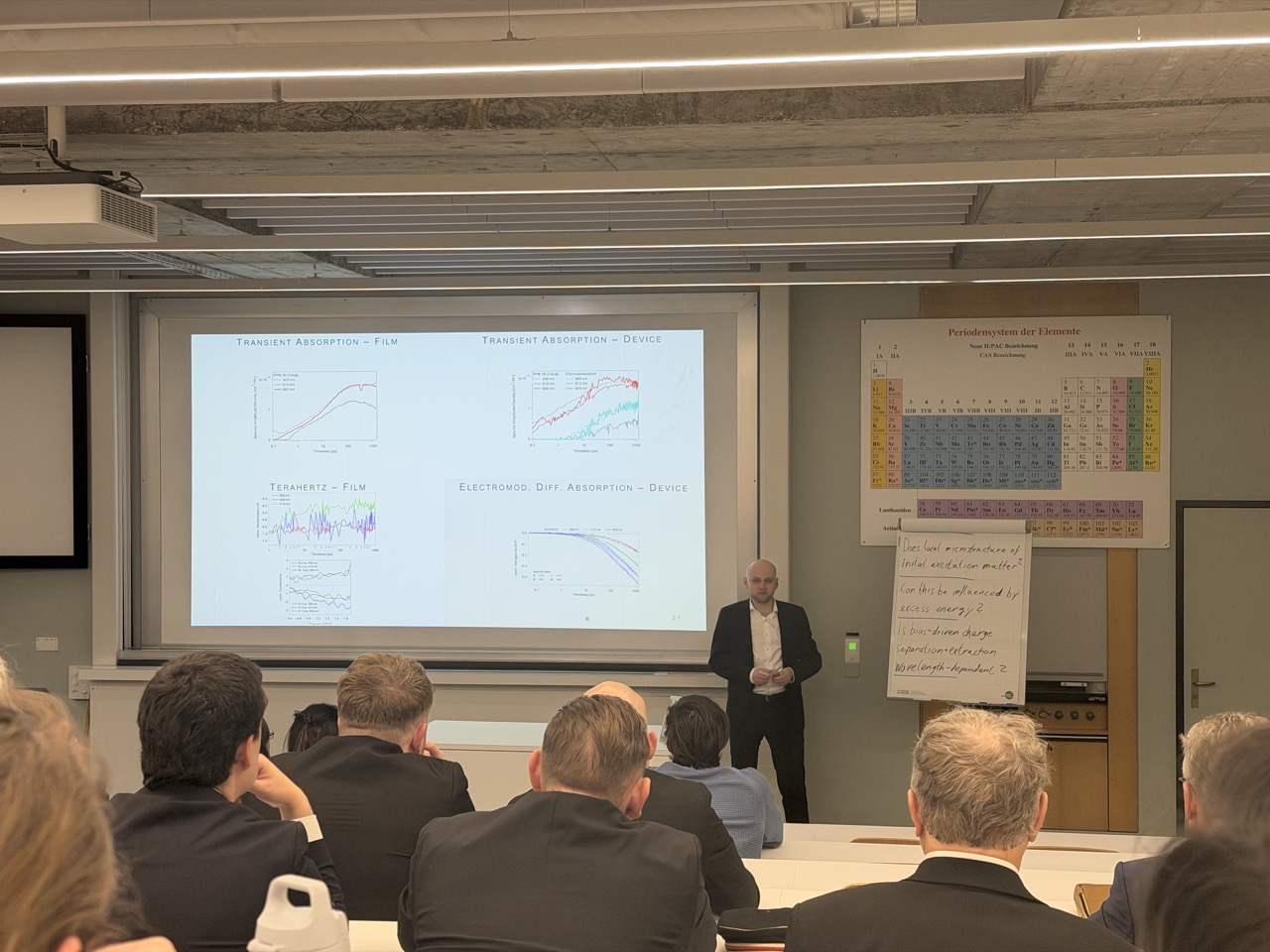
Introducing Dr. Cedric Hoffmann
New PhD in the house! Last Friday, Cedric successfully defended his PhD thesis on excitation-energy and field-driven ultrafast charge processes in organic semiconductors! You did a great job, and we wish you all the best for the future!
-

Dimitra at MATSUS Fall Meeting
Last week, Dimitra travelled to the MATSUS Fall Meeting in Valencia! There, she presented our research on mixed conductivity in electrochemically and chemically doped polymers and connected with the community! Thanks a lot Dimitra for the nice presentation!
-
New research published!
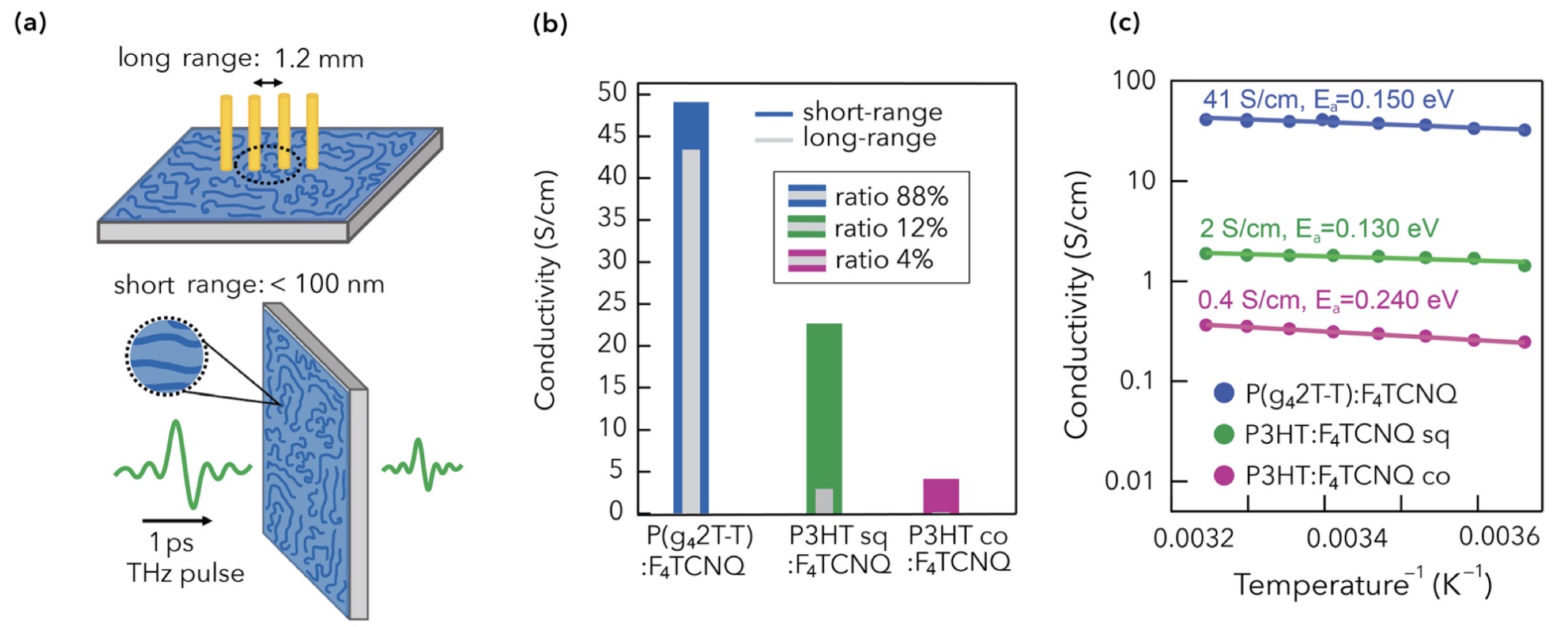
We are happy to announce our new publication by Eva! She investigated the distance–resilient conductivity in p-doped polythiophenes and compared aliphatic and glycolated sidechains. Many thanks to the groups of Christian Müller and Martijn Kemerink for the collaboration on this project!
-
New group member!
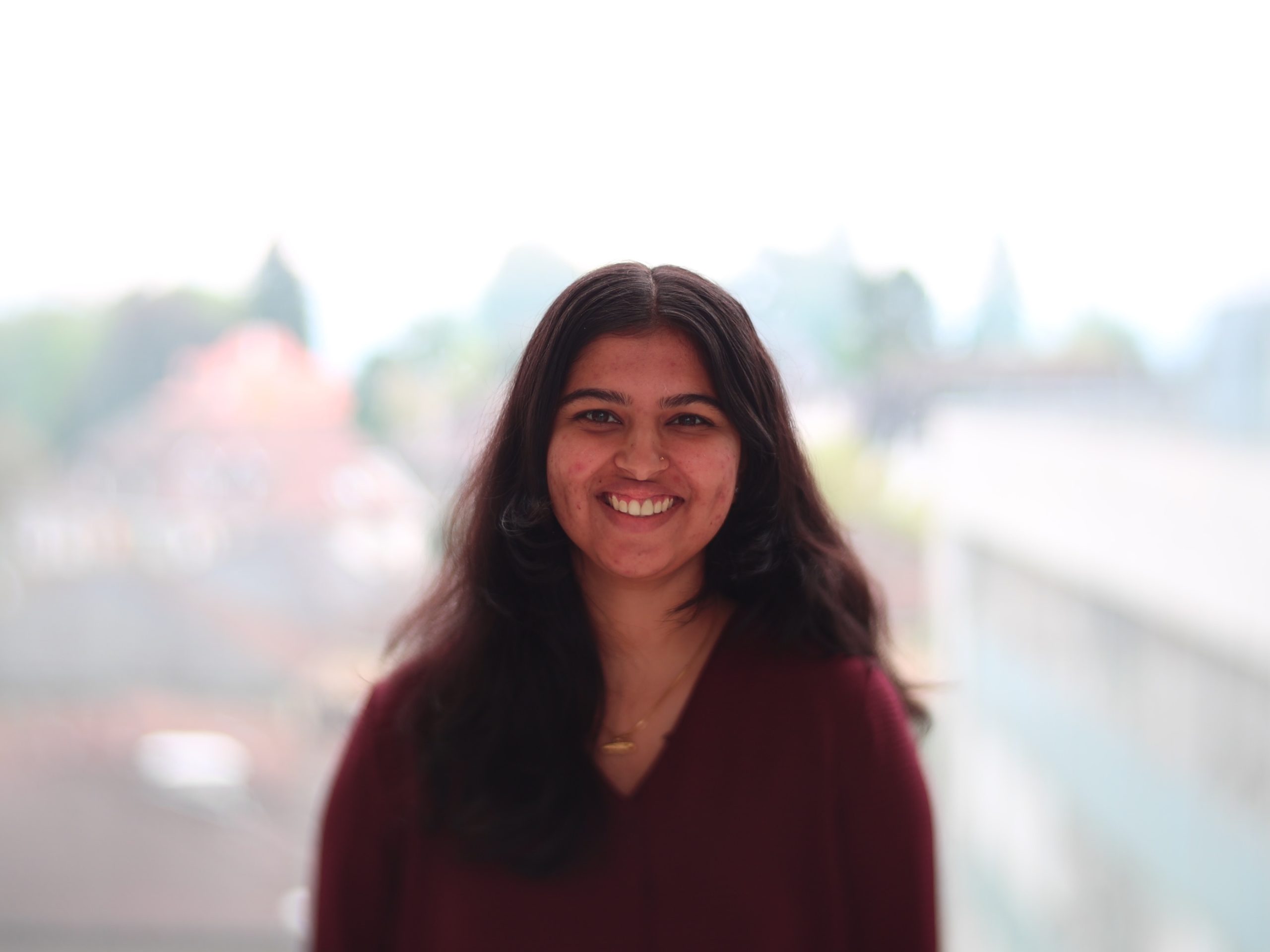
We are happy to announce that Gopika Suresh started her PhD with us in September! Gopika obtained her integrated BS–MS degree from IISER Thiruvananthapuram, India and she will join our photocatalysis subgroup, aiming to understand charge carrier dynamics that underpin photocatalytic activity. All the best for the start!
-
New group member!
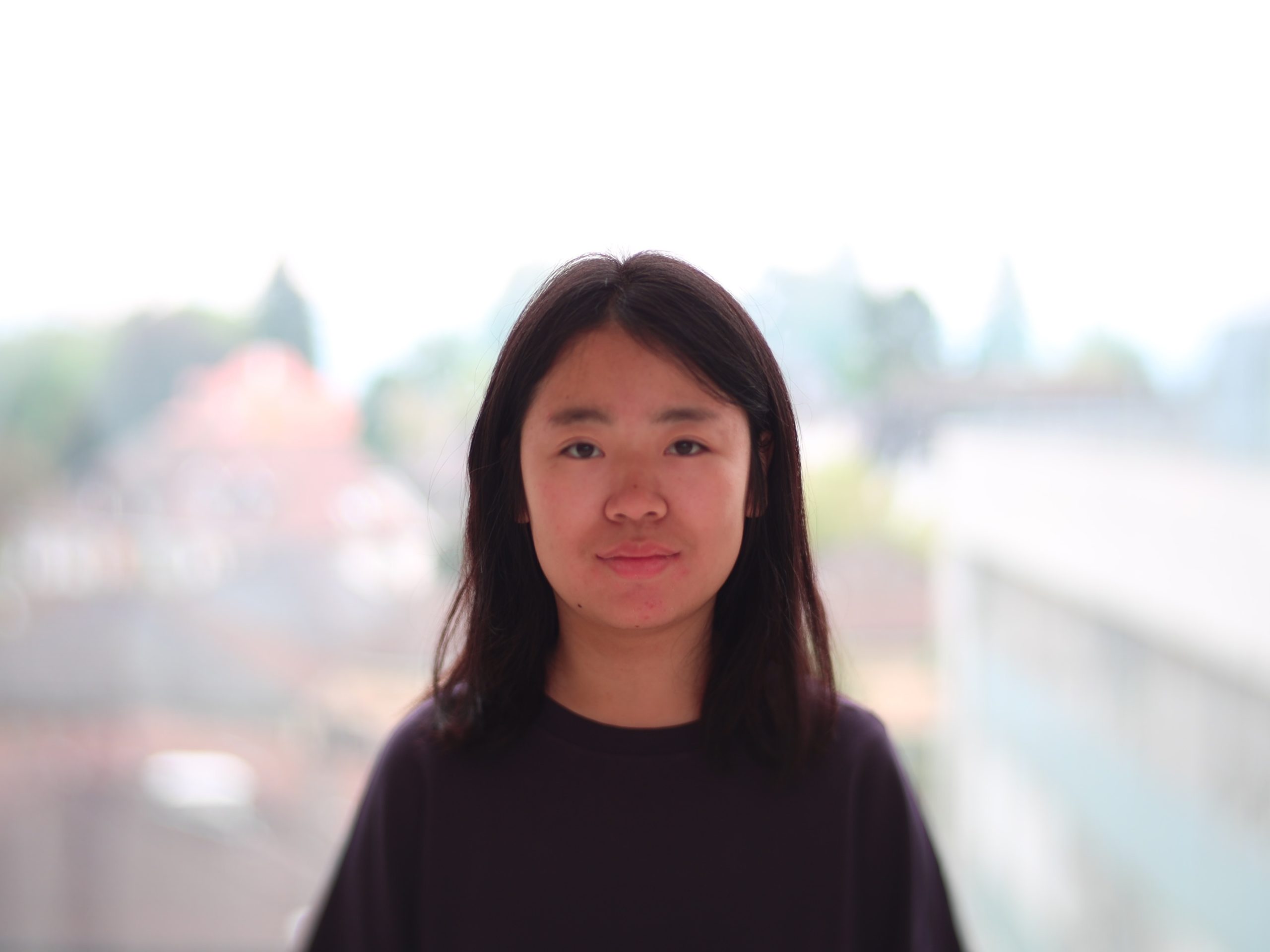
We have a new Bachelor student! Yunjeong joined our group in September after completing her Bachelor’s degree in Chemistry from Sogang University, Korea. She will investigate the dynamics of electrochemical doping with us. We wish you a good start!
-
Christian presents his research at the SCS Fall meeting
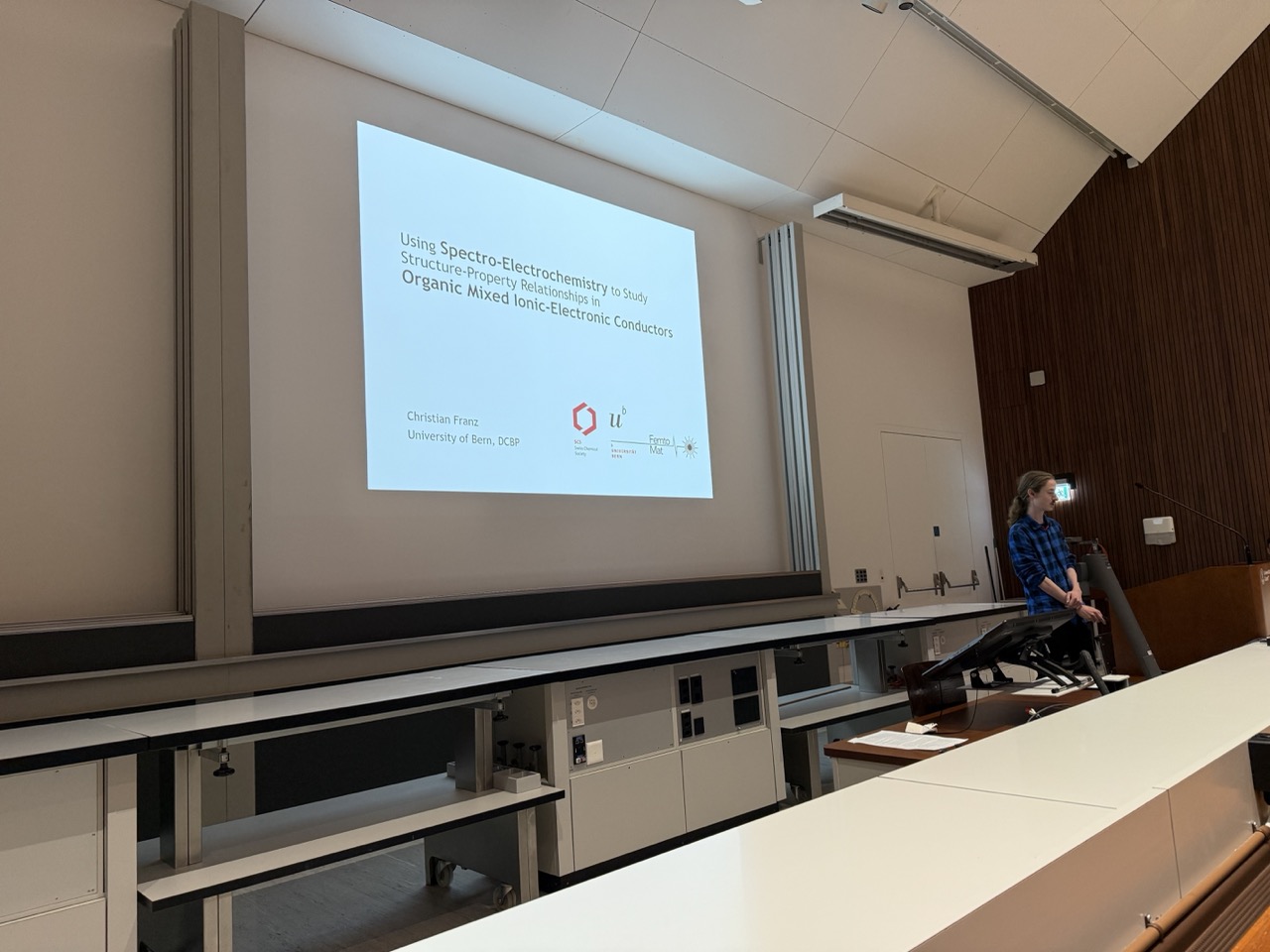
Christian presented his spectro-electrochemical studies on the structure–property relationships in organic mixed ionic–electronic conductors (OMIECs). Congratulations for the inspiring talk!
-
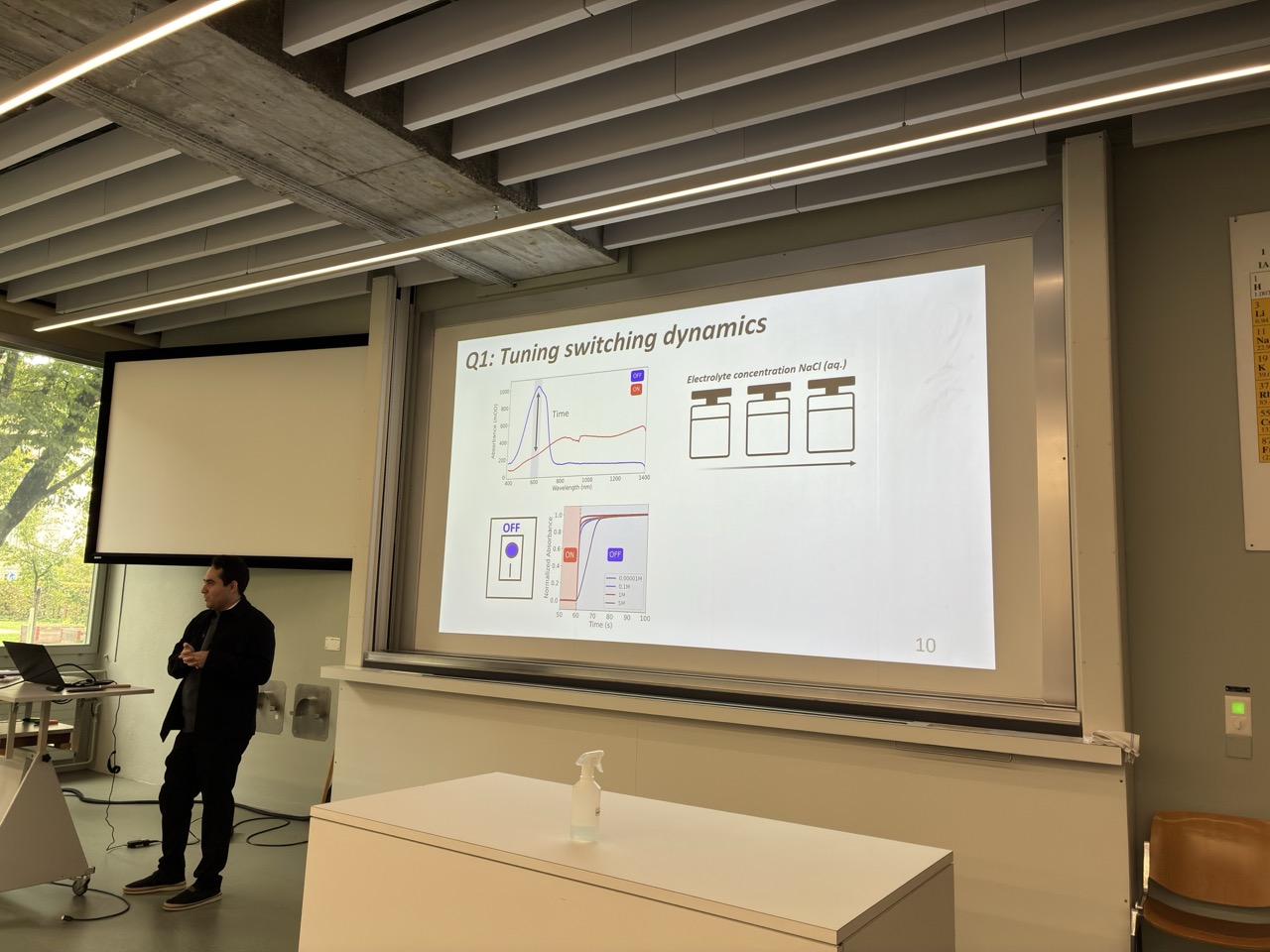
Alan’s First Year Symposium
In the beginning of September, our PhD student Alan Ávila presented his First Year Symposium. Congratulations on achieving this milestone! We wish you a lot of success on your academic journey!
-

Open PhD position!
We are very happy to announce that we are able to fill a PhD position in the field of spectroscopic characterization of doped organic thin films! To get more information, please refer to the attached PhD. We are looking forward to receiving your applications! PhD position in the field of spectroscopic characterization of doped organic thin films
-
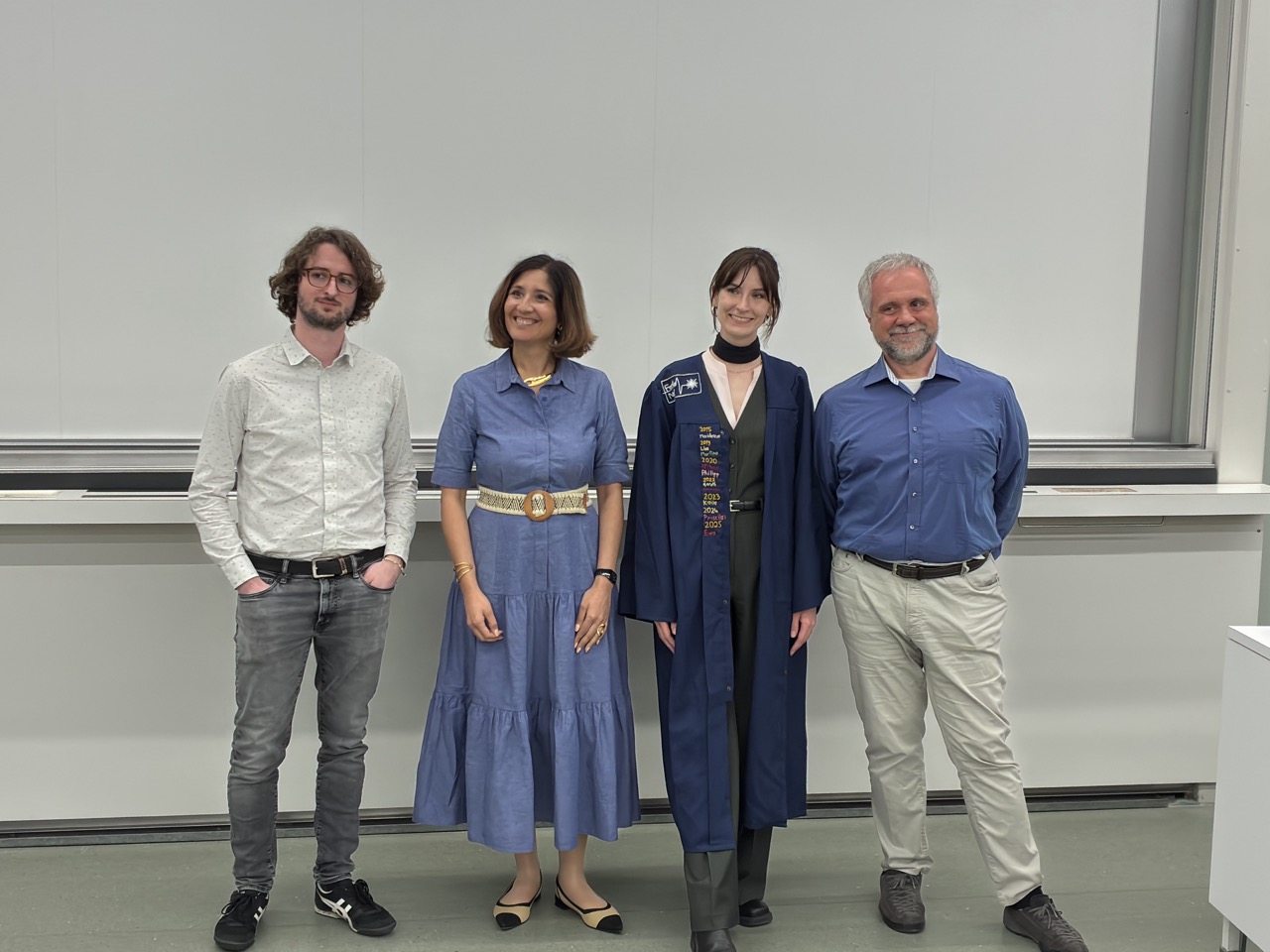
Eva successfully defended her thesis!!!
New PhD in the house! Last Friday, Eva successfully defended her PhD thesis on the conductivity of doped organic semiconductors! Thanks so much for the incredible insights into the charge transport on different length and temperature scales! You did a great job and we are very proud of you!
-
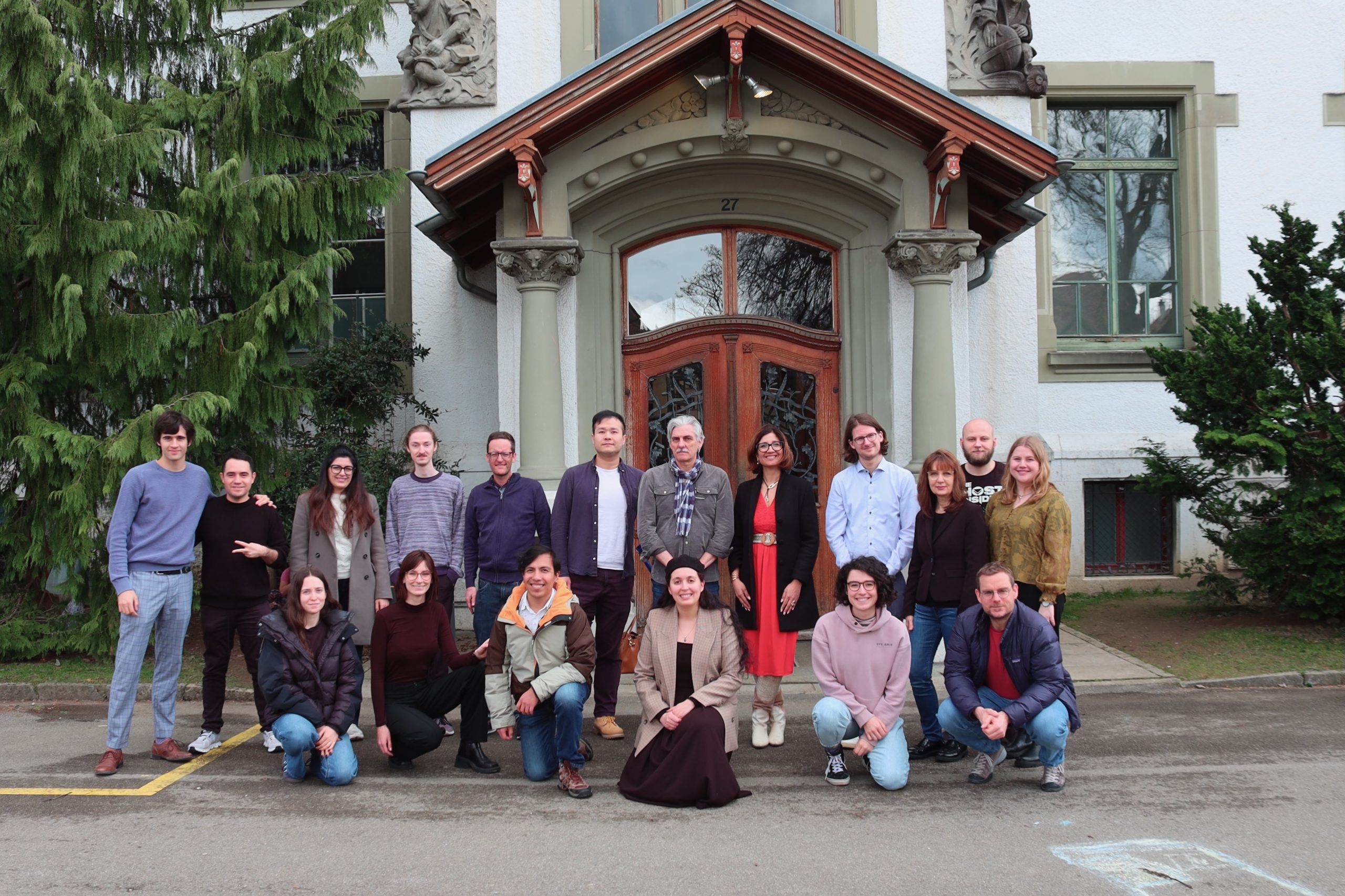
New group photo
Check out our new group photo 2025! We were growing over the past months and in the next weeks, we will present our new group members in detail. Stay tuned!
-
New research published!
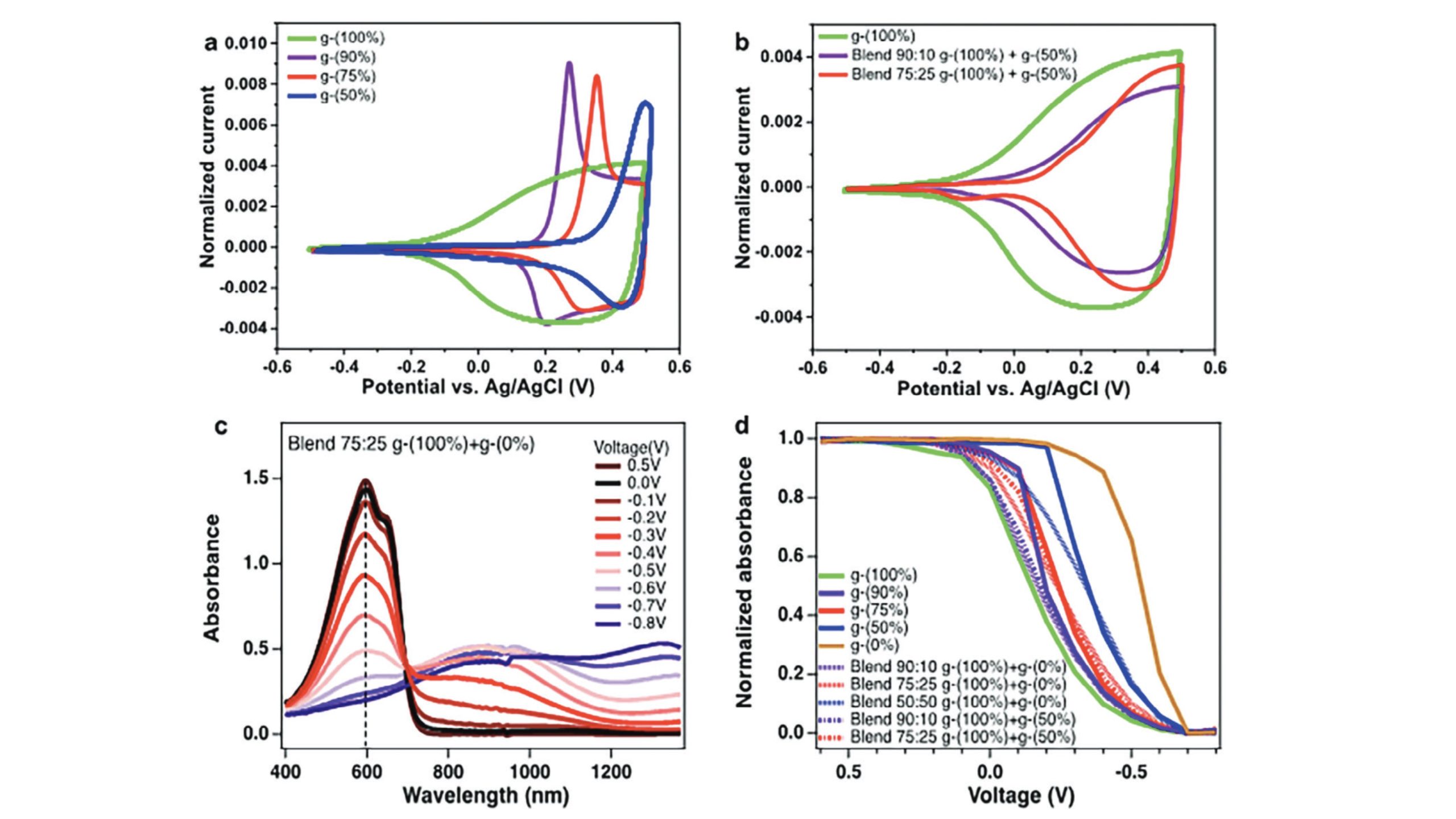
We are happy to announce our new publication by Kaishuai about the differences between copolymerization and physical mixing of glycolated and alkoxylated polymers in their OECT performance. Many thanks to the group of Wouter Maes for the collaboration on this project!